


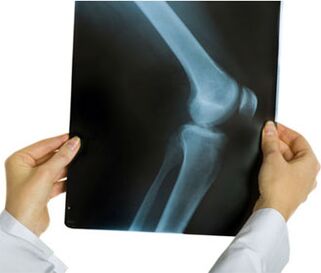
Osteoarthritis of the knee joint(gonarthrosis, osteoarthritis of the knee joint, deforming arthrosis of the knee joint) is a degenerative disease of the knee joint, characterized by destruction of the cartilage of the joint surfaces, deformation of the joint and disruption of its function.
It is believed that the initial changes in arthrosis of the knee joint are formed in the cartilage tissue at the molecular level.Over time, these changes lead to disruption of the physicochemical properties of cartilage.When examining cartilage preparations, it can be found that in places it begins to become cloudy, thin, peel and crack in different directions.
Ultimately, the pathological process ends with the complete disappearance of the cartilage to a greater or lesser extent, which leads to the exposure of the underlying bone.Knee osteoarthritis is most common in people over the age of 50.
More often, women suffer from arthrosis of the knee joint.Knee osteoarthritis can be unilateral or bilateral.The most common forms of arthrosis are medial.
Reasons for the development of arthrosis of the knee joint
Science does not know the exact cause of arthrosis, but there are a number of factors that usually contribute to the appearance of this disease:
- Previous injuries to the knee joint increase the risk of developing osteoarthritis;
- Heredity - in some cases, in patients with arthrosis, a defect is found in the gene responsible for the development of cartilage tissue, which leads to the fact that these people have an increased predisposition to the development of arthrosis, due to the low resistance of cartilage tissue to damage;
- Increased body weight - according to observations, most often arthrosis of the large joints of the lower limbs (knee, arthrosis of the hip joint) develops in patients with increased body weight and occurs due to excessive load on these joints.This can also lead to faster progression of the disease;
- Excessive load on the joint;
- Intra-articular crystal deposits - occur in some diseases associated with metabolic disorders, in particular uric acid, etc., which can lead to the destruction of cartilage.
Symptoms of arthrosis of the knee joint
Knee osteoarthritis symptoms are known to develop slowly over several years.
The most characteristic symptoms of arthrosis of the knee joint are:
- Pain deep in the knee joint, which occurs especially when moving and walking;
- Swelling of the knee joint;
- Morning stiffness in the morning, which disappears after a while when moving, patients note that they need to "spread out", then relief comes and movements in the knee joint improve;
- Crackling (crepitus) in the joint during movement.
Treatment of arthrosis of the knee joint
Currently, it is not possible to completely cure arthrosis of the knee joint.However, by starting treatment in the early stages of the disease, it is possible to stop the progression of the destruction of articular cartilage tissue for a long time.
The treatment center offers modern treatment of arthrosis of the knee joint, based on an integrated multifaceted approach and includes:
- Using knee pads to relieve the medial parts of the joint;
- Taking non-steroidal anti-inflammatory drugs, which allows you to stop inflammation in the joint and reduce pain;
- Reducing excess body weight reliably slows the progression of osteoarthritis;
- Therapeutic exercises, eliminating axial loads on the joint, allow you to restore muscle tone, prevent muscle loss and restore the range of motion in the joint;
- Taking small doses of muscle relaxants leads to a reduction in periarticular muscle spasm, which also significantly reduces pain;
- Physiotherapy treatment courses;
- Injection of preparations with hyaluronic acid into the joint, which is a synovial fluid prosthesis;
- Taking drugs from the group of chondroprotectors;
- Taking drugs that improve blood rheology and bone blood supply;
- In some cases, arthroscopy of the knee joint;
- Knee replacement - knee replacement when conservative treatment is ineffective.
Knee arthrosis surgery is performed free of charge as part of the VMP.
Subject to medical indications and referral quotas, our center operates with funds allocated under the High Technology Medical Assistance Program (HTMP).
Learn more about the Advanced Medical Care program.
Treatment of knee arthrosis using the PRP method
Along with the above classical methods of conservative treatment of deforming arthrosis of the knee joint, our clinic has a unique opportunity for treatment using a unique technique based on introducing into the affected joint a biologically active substance isolated from the patient's own blood - enriched autologous platelet plasma (PRP therapy), which allows influencing the key link in the pathogenesis of arthrosis - regeneration - restoration of cartilage tissue.
As a result of the treatment with enriched autologous platelet plasma, the patient does not use "chemical" drugs, does not need daily visits to a physical therapist, etc.In this way, there is no effect of the drugs on the body as a whole and the load on such important organs as the liver and kidneys is reduced.